Choosing the right diamond bits for 3D stone carving is one of the most important decisions in CNC stone processing. Even the most advanced stone carving machine cannot deliver clean details, smooth curves, or efficient production if the tooling is incorrect. Whether you are carving marble statues, granite memorials, relief panels, sink basins, columns, or custom architectural decorations, selecting the proper diamond bit directly affects cutting speed, tool life, surface finish, and final profitability.
In this guide, we will explain how to choose the right diamond bits for 3D stone carving based on stone type, carving depth, design complexity, machine spindle power, and production goals.
Why Diamond Bits Matter in 3D Stone Carving
Natural stone is hard, abrasive, and expensive. Unlike wood or plastic, stone requires tooling that can withstand high friction and maintain precision over long working hours.
High-quality diamond bits help you achieve:
- Faster material removal
- Cleaner edge finishing
- Better 3D contour accuracy
- Lower risk of stone cracking
- Longer tool lifespan
- Reduced machine downtime
- Lower cost per finished product
For example, when carving a marble statue for 10 continuous hours, a premium sintered diamond bit can maintain stable cutting performance, while a low-grade electroplated bit may lose sharpness quickly and create burn marks or uneven surfaces.
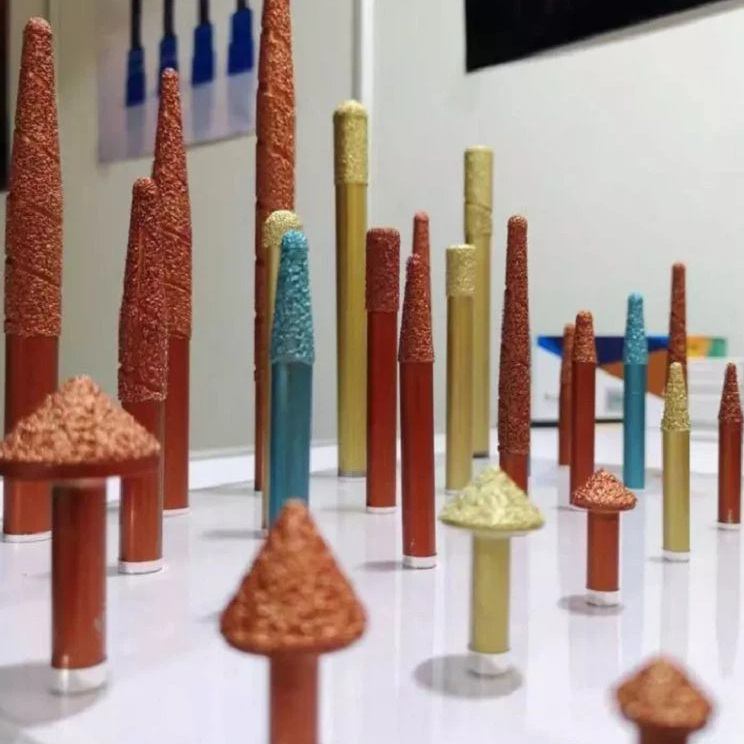
Main Types of Diamond Bits for 3D Stone Carving
Different carving stages require different tools. Professional workshops usually use multiple bit types in one project.
1. Flat End Diamond Bits
Best for:
- Rough cutting
- Pocketing
- Removing large stone volume
- Creating flat surfaces
These bits are commonly used in the first machining stage when shaping blocks into basic forms.
2. Ball Nose Diamond Bits
Best for:
- 3D contour carving
- Sculptures
- Curved surfaces
- Human faces and statues
Ball nose bits are essential for detailed 3D carving because they create smooth tool paths and natural curves.
3. V Shape Diamond Bits
Best for:
- Letter engraving
- Decorative lines
- Fine grooves
- Border patterns
Often used for tombstone lettering and ornamental stone signs.
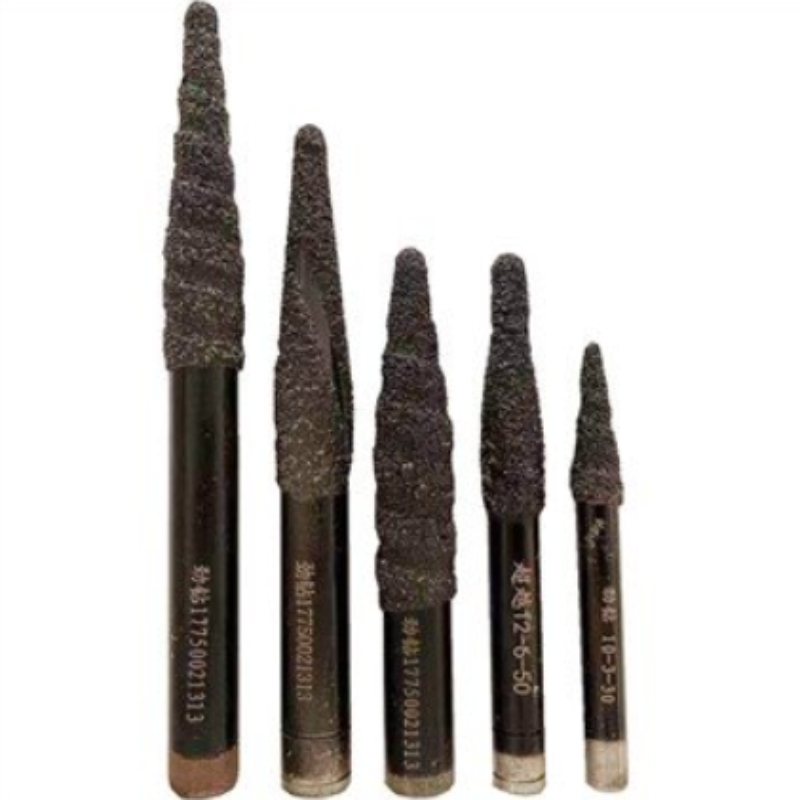
4. Tapered Diamond Bits
Best for:
- Deep narrow carving
- Fine detail work
- Relief art
- Intricate corners
Tapered bits provide strength while reaching small areas.
5. Finger Bits
Best for:
- Internal hole enlargement
- Sink cutouts
- Edge shaping
- Aggressive stock removal
Frequently used in countertop fabrication.
How to Choose Based on Stone Material
Different stones require different bond hardness and tool structure.
For Marble: Marble is softer than granite and easier to carve.
Recommended bits:
- Electroplated bits for detail carving
- Ball nose bits for sculpture work
- Medium grit polishing tools
Advantages:
- Faster carving speed
- Better fine detail reproduction
For Granite: Granite is harder and more abrasive.
Recommended bits:
- Sintered diamond bits
- Reinforced core structure
- Lower feed speed with stable coolant
Granite carving requires stronger tooling because low-quality bits wear quickly.
For Quartz / Engineered Stone: Quartz contains resin and hard minerals.
Recommended bits:
- Heat-resistant diamond tools
- Anti-loading design
- Continuous water cooling
How to Choose Based on Carving Stage
Stage 1: Roughing
Goal: Remove maximum material quickly.
Choose:
- Large diameter flat end bits
- Coarse grit
- Strong shank design
Example: 12mm to 20mm diamond roughing tools for statue blank shaping.
Stage 2: Semi-Finishing
Goal: Refine shape before final details.
Choose:
- Ball nose bits
- Medium grit
- Moderate diameter
Stage 3: Finishing
Goal: Final texture and precision.
Choose:
- Small ball nose bits
- Tapered detail bits
- Fine grit tools
Example: 3mm to 6mm bits for facial features or floral carving.
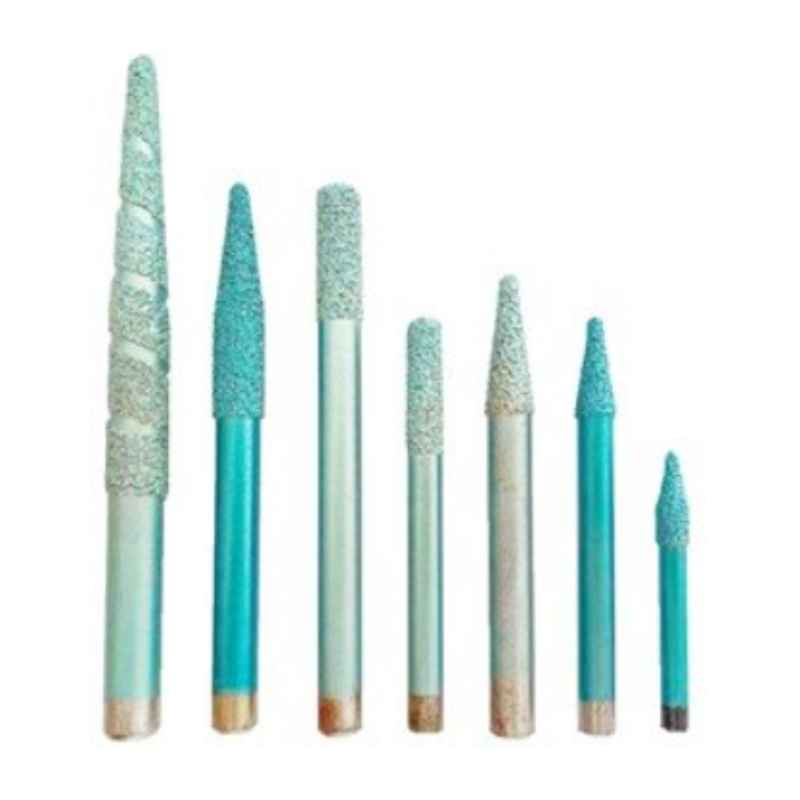
How Bit Size Affects Results
Large Diameter Bits
Advantages:
- Faster roughing
- Stronger structure
- Longer life under heavy load
Disadvantages: Cannot produce fine detail
Small Diameter Bits
Advantages:
- High precision
- Better detail resolution
- Suitable for lettering and sculpture finishing
Disadvantages:
- Slower removal rate
- Easier to break if feed rate is too aggressive
Best practice: Use larger tools first, then smaller finishing bits later.
Bond Type: Electroplated vs Sintered Diamond Bits
Electroplated Diamond Bits
Pros:
- Sharper cutting feel
- Good for marble and soft stone
- Lower initial cost
Cons: Shorter lifespan
Best for short runs or detailed carving.
Sintered Diamond Bits
Pros:
- Much longer life
- Better for granite
- Suitable for industrial production
Cons: Higher purchase price
Best for factories running machines daily.
Common Buyer Mistakes When Choosing Diamond Bits
1. Using One Tool for Every Job
A single bit cannot rough cut granite and also finish a marble portrait efficiently.
2. Choosing Cheapest Tools Only
Low-price tools often increase total cost through breakage, poor finish, and lost production time.
3. Ignoring Machine Power
A small spindle machine may struggle with oversized bits.
4. Wrong Feed Speed
Even premium bits fail if feed rate is too fast or spindle RPM is incorrect.
5. No Cooling System
Water cooling greatly extends tool life and improves surface quality.
Practical Example: Tombstone Relief Carving
If producing granite memorial relief panels:
Recommended Tool Set
- 16mm flat bit for roughing background
- 8mm ball nose for shaping portrait contours
- 4mm tapered ball nose for facial details
- V bit for lettering
- Polishing tools for final shine
This multi-tool workflow improves speed and quality compared with using only one bit.
How to Evaluate a Good Diamond Bit Supplier
Before ordering, ask:
- What stone materials is the bit designed for?
- Is it electroplated or sintered?
- Recommended RPM and feed rate?
- Expected lifespan in granite or marble?
- Can custom sizes be supplied?
- Is balancing tested for CNC spindle use?
- Do they provide after-sales support?
Reliable suppliers usually offer technical parameters instead of only saying “high quality”.
Maintenance Tips to Extend Tool Life
- Use stable water cooling
- Avoid sudden impact into stone
- Keep spindle concentric and balanced
- Clean tool after use
- Store dry and organized
- Replace worn tools before catastrophic failure
A properly maintained diamond bit can reduce tooling cost significantly over one production season.
FAQ
1. What is the best diamond bit for 3D stone statues?
Ball nose sintered diamond bits are usually the best choice for smooth contours and detailed sculpture work.
2. Can I use wood CNC bits on stone?
No. Wood tools are not designed for stone hardness and will fail quickly.
3. How long do diamond bits last?
It depends on material, cooling, machine settings, and quality. Marble tools last longer than granite tools in most cases.
4. Should I buy cheap bits for testing?
Testing is acceptable, but production work should use stable professional-grade tools.
Final Thoughts
Choosing the right diamond bits for 3D stone carving is not only about price—it is about matching the tool to the stone, machine, and final design. Smart tool selection improves carving speed, surface finish, precision, and overall profit.
For professional stone factories, the best strategy is to build a complete tool system: roughing bits, contour bits, detail bits, lettering bits, and polishing tools. This creates consistent quality and faster production across statues, countertops, memorials, and decorative stone projects.
If you are investing in a CNC stone carving machine, choosing the right diamond tooling is just as important as choosing the machine itself.