头部背景图片

Why Customers Choose the Hyundai 220LC-9S Excavator!

2025-09-03

When contractors are looking for a reliable and cost-effective excavator, the Hyundai 220LC-9S often becomes their first choice. This model is well recognized for its stable performance, easy maintenance, and excellent value for money, making it popular in Africa, Asia, and the Middle East.


Here are the main reasons why customers continue to choose the Hyundai 220LC-9S:


1. Stable and Reliable Performance

The Hyundai 220LC-9S is built to handle demanding work environments such as earthmoving, road building, and mining projects. Its powerful Cummins/Hyundai engine provides consistent digging force, strong lifting capacity, and reliable fuel efficiency. Contractors appreciate its ability to perform steadily even under tough soil and rock conditions.


 2. Easy Access to Spare Parts

Another key advantage of the Hyundai 220LC-9S is the availability of spare parts. Compared with other brands, Hyundai has a well-established parts supply network. This makes it easy for customers in Africa and beyond** to find replacement parts quickly, reducing downtime and ensuring continuous project progress.


3. Comfortable and User-Friendly Cabin

Operator comfort is essential for productivity. The Hyundai 220LC-9S features a spacious cabin with ergonomic controls, adjustable seating, and advanced monitoring systems. These features reduce fatigue and increase efficiency, especially for operators working long shifts.


4. Excellent Value for Money

The Hyundai 220LC-9S delivers the perfect balance of affordable purchase cost, low maintenance expenses, and strong resale value. This makes it an ideal investment for contractors looking to expand their fleet with a reliable and durable excavator.


Conclusion: A Smart Choice for African Projects


The Hyundai 220LC-9S excavator is trusted by contractors worldwide for its reliability, spare parts availability, operator comfort, and overall value. For companies aiming to succeed in African infrastructure and construction projects, it remains one of the best investment choices.


Looking for a Hyundai 220LC-9S excavator?

We supply high-quality used Hyundai excavators and other construction machinery, shipped directly to Africa and global markets.


Contact us today to get the best price on a Hyundai 220LC-9S and expand your fleet with confidence!


high-quality used Hyundai excavators


BALLY Water Penetration Tester GT-KC06 – A Complete Guide

2025-09-03
BALLY Water Penetration Tester GT-KC06 – A Complete Guide


Leather is a widely used material, and its waterproof and breathable properties are important indicators for evaluating its quality.


What is the BALLY Water Penetration Tester

Bally Water Resistance Tester is used to determine the water penetration for various shoe upper materials as leather,synthetic leather,cloth etc.cut the specimen,then place it into the machine,immersing the specimen into water and flexing it to measure Penetration index or the based of or improve the materials ,water-proof processing.leather,leather,cloth etc.

Working Principle
A rectangular test specimen is bent partly round, and secured between, two cylindrical clamps so as to form a trough. The trough is then immersed in water and the clamps oscillate at a constant speed so that the specimen is repeatedly flexed. The time taken for water penetration through the test specimen to occur is recorded. The mass of water absorbed by, and transmitted through, the test specimen can also be measured.
BALLY Water Penetration Tester
How to Conduct BALLY Water Penetration Test

Prepare (Step 1 - Step 4)

  • Step 1: adjust the movement stroke required for the test (15%, 10%, 7.5%, 5%). The eccentric must be consistent with the percentage of bit holes.


  • Step 2: Turn on the power and enter the test page.


  • Step 3: Use the jog button [Micro M] on the test page to move the distance between the two fixtures to the maximum position (40mm) and align at the red line.


  • Step 4: Install the sample (75x60mm), the side length 60mm is the direction of 15% compression, and the side length 75mm is the clamping direction of the U-shaped fixture.

Setup (Step 5 - Step 11)

  • Step 5: Insert the electrode and pour the conductive copper spring (17g).


  • Step 6: Lift up the sink with a certain amount of water.


  • Step7:Insert the pin to fix the position of the sink.


  • Step8:the water in the sink should reach the water mark level of the fixture. Note: This is the water level mark on the fixture.


  • Step 9: [Zero Ch] and [Zero Total] are used to clear data.


  • Step 10: Select the station that needs to be worked, [ON] means to open this station, [OFF] means to close this station, only the [ON] state this station can work normally, [OFF] means not working.


  • Step 11: Enter the setting interface, you can set the test stop condition [Stop Mode].


Start test and Result (Step 12 - Step 17)


  • Step 12: Press the Start button, the bally waterproofness tester starts testing.


  • Step 13: [SPD] shows the speed, all four stations are displayed in operation.


  • Step14: [PV] is the set number of times, [CV] is the actual number of times. When the set number is reached, the machine will stop.


  • Step15: Within the set number of times, if the sample leaks, the equipment will automatically stop.


  • Step16: When the set number of times is reached, the equipment will stop automatically.


  • Step17: For example, [CH.4] stops counting, which means that the sample is leaking.

Other Water Penetration Test Method

Maeser Water Penetration Tester
Maeser Water Penetration Tester is used to determine the resistance of leather, artical leather, fabric and so on material to water penetration on flexing. The method is mainly applicable to footwear upper outer materials but can be used with any flexible sheet material.

Footwear Water Penetration & Flexing Tester GT-KA02
The Footwear Water Penetration & Flexing Tester can be used to test the dynamic waterproof performance of different kinds of finished shoes.


Circular Rubbing Colour Fastness Tester GT-KC52 Benefits, Applications, and Buying Guide

2025-09-03

Circular Rubbing Colour Fastness Tester GT-KC52: Features, Operation, and Buying Guide

If you’ve been in manufacturing, then you may have heard of how important colour fastness is. Whether a product’s colour can withstand friction damage affects its quality and brand reputation. In this process, an accurate and reliable testing instrument is key.

But why do you need the GT-KC52 Circular Friction Colour Fastness Tester?


Let’s delve in to answer your whys.


Circular rub fastness tester


What is the Circular Rubbing Colour Fastness Tester GT-KC52

This Rubbing Colour Fastness Tester is used for assess colored materials friction damage and surface color transfer. It is suitable test the upper materials, such as leather, plastics and fabric etc.

Under constant pressure condition, rubbing can be carried out in dry or wet circle wool felt, the machine will stop when the preset rub count has bees reached. Fastness can be judged by the effect on the sample material or the transfer of color to the rubbing pad and assessed by reference to a standard gray scale.


Rubbing Colour Fastness Tester


Features of Rubbing Colour Fastness Tester

1. Rub fastness tester: test methods: dry rubbing, wet rubbing, perspiration rubbing, alcohol rubbing, organic liquids rubbing. (The probational liquid need to be prepared by customers)
2. The counter can pre-determined test counts and show actual test count. The machine will stop when the preset count has been reached.
3. Memory function: when preset count has not been reached, if to stop test by manual, the current number of test will be saved until to clear it to zero or continue testing; if to shutdown and restart the machine, the current data will be clear to zero, the preset count would be the value of last set.
4. Rotary Rubbing Fastness Tester: according to different requirements of testing, can be applied to correspondent load.

How to Operate the Rotary Rubbing Fastness Tester


Acceptance
Inspection accessories (according to order): Square iron block (dry rubbing test after organic solvent is moistened from the back), round aluminum block (help to cool sample during dry rub test), weight.

Adjust the level of the machine according to the level.
Confirm the power supply and connect it. Turn on the power switch and emergency stop switch.
Click "English" to enter the test interface.
Click "Micro" to check if the machine is working properly.
Make sure the friction head is lifting and lowering normally without any jamming.

Dry rub test operation
Install the wool felt: Lift the fixture and install the wool felt on it.
Place the specimen test side up and lower the fixture.
Install the weights.

Parameter settings:
Test times setting: Click "English", click "SETTING" to enter the parameter interface,
there are "Counter" and "Timer" modes, select "Counter" mode, click to set the number of times 64.
Speed set: 150 ± 5r/min.
Click "TEST" to return to the test interface, click "Zero" to clear, click "TEST" to start test.

For specimens with low melting or softening temperature coatings on the surface during testing, the machine should be stopped periodically to avoid heat damage.
A round aluminum block was placed over the area where the specimen was rubbed, and the specimen was placed on the circular aluminum block and allowed to sit for 30 seconds to help remove the heat before the test was continued.

When the testing cycles is reached, it will stop automatically. Lift up the fixture, remove the specimen and observe.

Comprehensive Testing of Insole Materials Thickness, Flexing Index, Abrasion, and Water Absorption/Desorption

2025-09-03

Comprehensive Testing of Insole Materials: Thickness, Flexing Index, Abrasion, and Water Absorption/Desorption

Insoles are a critical component in footwear that directly contacts the foot, providing comfort, support, and cushioning. To ensure the comfort, safety, and durability of insoles, a series of tests must be conducted.


Testing Items

The testing items for insoles primarily include the following aspects:

1. Thickness (mm)
The thickness of insoles directly affect their cushioning effect and support performance.

Test apparatus:
Thickness Gauge ( Leather ) GT-KD07
The thickness gauge is used to measure the thickness of vulcanized rubber and leather products. Clamp specimen between up and down parallel round plates. The pointed graduation is the thickness.

Standards:
IS 15298 (Part 1)
BS-903-A38, ISO-4648, AASTMD1813, ISO 2589, SATRA TM48
Thickness Gauge ( Leather ) GT-KD07
2. Flexing index (Only applicable for cellulose board)
Evaluate the durability and fatigue performance of insole materials or products under repeated bending and flexing conditions. Simulate the usage conditions of insoles under repeated bending conditions to test their fold resistance. Insoles with good fold resistance are less likely to break or deform during prolonged use.

Test apparatus:
Fibre Board Flexing Tester GT-KB07
Fibre Board Flexing Tester is used to determine flex test for shoe insole fiberboard and applicable for common leather shoes and sneaker insole fiberboard, but not for toe cap, counter-heel, semi-back and special leather shoes and sneaker insole fiberboard.

Standards:
Annex ‘F’

QB/T 1472, BS 5131: 4.2, SATRA TM3

Fibre Board Flexing Tester GT-KB07

Temperature and Humidity Climatic Test Chamber GT-C52
Temperature Humidity Test Chamber is for conditioning of samples prior to testing. It also can be used for a variety of materials of high - low temperature alternating test. The test temperature, humidity, time can be programmed. Provides conditions of temperature form -40degree to +150degree and of humidity form 20% to 98

Standards of climatic test chamber:
CNS, ISO, JIS, ASTM, DIN, BS, IEC, NACE, UL,MIL
Temperature and Humidity Climatic Test Chamber GT-C52
3. Abrasion Resistance (400 cycles)
Evaluate the wear resistance of the insole through abrasion tests to ensure it does not wear out or damage quickly after prolonged use.

Test apparatus:
IULTCS & Veslic Leather Abrasion Tester GT-KC01-1
This IULTCS & Veslic Leather Abrasion Tester is used for color fastness testing of leather, plastic and textile. Under the specified pressure, let white wool felt to do reciprocating abrasion to the surface of dye sample. After a specified count, to assess the color fastness of sample by checking the color change and fading of sample and the discoloration of white wool felt. Rubbing Fastness Tester can be used for dry abrasion testing and wet abrasion test.

Standards:
cl. 7.3.2.1 IS 15298 part 1
DIN 4843, ISO 11640, SATRA PM 173, AS/NZS 2210.2 section7.3
QB/T 2537, GB/T 20991 section 7.3, ISO 20868,
EN ISO20344 section 7.3, ISO 17700 Method A, GE-29
IULTCS & Veslic Leather Abrasion Tester GT-KC01-1
4. Water Absorption, mg/cm2 and Water Desorption, percent
Test the moisture absorption properties of the insole material to ensure it remains dry and comfortable during use. This is typically assessed through Water Absorption and Water Desorption tests.

Test apparatus:
Insole / Insock Absorption and Desorption Tester GT-KC07
This Insole / Insock Absorption And Desorption Tester is used to determine the water absorption and desorption of insole and insock for various shoes. The specimen, placed onto a wet base plate, is submitted to repeated flexing during under a given pressure (in the same manner as the insole of a shoe during working).

Standards
EN ISO 20344 section 7.2 , GB/T 20991 section 7.2
EN ISO 20347 section 5.7.3   AS/NZS 2210.2 section 7.2
EN 12746, ISO 22649, SATRA TM220, BS 3144 section 22
ISO5404, cl. 7.2.2 of IS 15298 part 1

Insole / Insock Absorption and Desorption Tester GT-KC07

The quality and performance of insoles directly affect wearing comfort and foot health. Through comprehensive insole material testing, the safety, comfort, and durability of insoles during use can be ensured.

What to Look for When Choosing Metal Stamping Parts in 2025

2025-09-03

As manufacturing continues to evolve in 2025, the demand for precision, durability, and cost-efficiency in Metal Stamping Parts has never been higher. From automotive to electronics and consumer goods, metal stamping remains a cornerstone of modern production. But with so many options on the market, what should businesses look for when sourcing stamped components this year?


Material Quality Matters

The performance of Metal Stamping Parts largely depends on the material used. SGCC, for example, is widely recognized for its excellent corrosion resistance and strength. Choosing SGCC Metal Stamping Parts ensures longer product lifespans, reduced maintenance, and improved reliability—key factors for industries where durability is non-negotiable. In 2025, sustainability also plays a role, with more buyers demanding eco-friendly materials without compromising quality.


Precision and Design Capabilities

Modern applications require highly precise shapes and complex geometries. Manufacturers that provide advanced tooling and CNC-integrated stamping can deliver components with tighter tolerances and consistent accuracy. Whether for structural support, enclosures, or intricate fittings, having reliable Metal Stamping Support helps brands bring innovative designs to life while maintaining production efficiency.


Supplier Reliability and Service

Beyond the parts themselves, partnering with the right supplier is crucial. Delivery timelines, customization capabilities, and after-sales support can make or break a project. Look for suppliers that combine technical expertise with responsive customer service to ensure smooth collaboration and reliable outcomes.

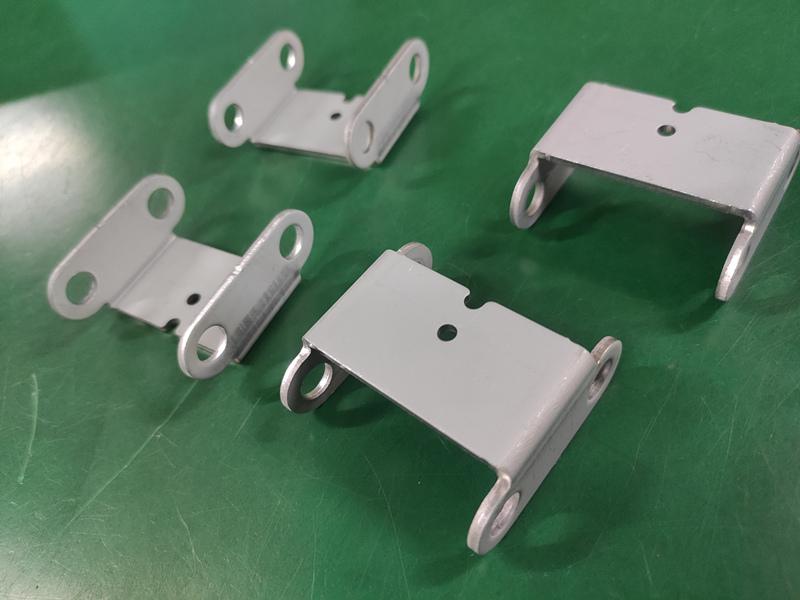
Metal Stamping Parts Factory


Why Choose Jiaxin Metal Stamping Parts?

When it comes to quality and service, Jiaxin Metal Stamping Parts stand out in the global market. Jiaxin provides not only top-grade SGCC Metal Stamping Parts but also customized solutions tailored to diverse industries. With advanced equipment, strict quality control, and a skilled engineering team, Jiaxin ensures every stamped component meets international standards.


What truly sets Jiaxin apart is its commitment to customer partnerships—offering fast lead times, flexible OEM/ODM services, and technical support that goes beyond standard supply. For businesses looking to secure dependable Metal Stamping Support in 2025, Jiaxin remains a trusted choice.


Choose Jiaxin for precision, reliability, and service that drives your success forward.

Can I Replace R404A with R134A?

2025-08-29

The idea of swapping R404A with R134A may sound simple, but it's not that straightforward. These two refrigerants have different properties and are designed for different types of systems, so just replacing one with the other isn't recommended.


What’s the Difference Between R404A and R134A?

R404A is a blend of gases mainly used in low-temperature systems, like freezers and refrigerated trucks. It has a high GWP (Global Warming Potential), making it a target for phase-out due to environmental concerns.

R134A, on the other hand, is used in medium-temperature systems, like air conditioners and refrigerators. It has a lower GWP than R404A, but it still contributes to global warming, so it's not a perfect solution either.


Why You Can't Just Swap Them?

Temperature Range

R404A works well in systems that require very low temperatures, while R134A performs better in moderate temperature environments. Swapping them could lead to poor cooling performance.


Pressure Differences

R404A operates at higher pressures than R134A. If you switch refrigerants, the system might not work properly, and you could risk damaging parts like the compressor.


Lubricant Compatibility

The oils used in refrigeration systems are tailored to the refrigerant. If you change from R404A to R134A, you may need to replace or flush the oil, as they are not always compatible.


Can You Convert the System?

Technically, you can convert a system, but it requires replacing or adjusting key components like the compressor, expansion valve, and lubricants. It’s not a simple or cheap process.


The Environmental Aspect

While R134A is better for the environment than R404A, it still has a high GWP. More eco-friendly options like R32 or R1234yf are available and becoming more popular as replacements.


Conclusion

In short, you can’t just replace R404A with R134A without modifying your system. If you're aiming for a more eco-friendly refrigerant, it might be better to explore newer alternatives with lower environmental impact. Always consult a professional if you're considering a refrigerant change.

What Type of Gas is R32?

2025-08-29

When it comes to air conditioning and refrigeration, the term "refrigerant" often pops up. But among the many refrigerants used, R32 is becoming increasingly popular. So, what exactly is R32, and why is it causing such a buzz in the industry?


R32: A Modern Refrigerant

R32 is a type of refrigerant gas used in air conditioning and refrigeration systems. Technically, it’s a hydrofluorocarbon (HFC), which is a chemical compound that helps transfer heat efficiently. But more specifically, R32 is known for being a low global warming potential (GWP) gas compared to older refrigerants, like R22 or R410A.


What's the Difference Between R32 and Freon Gas?

You might have heard of "Freon," a term commonly used to refer to refrigerant gases. However, “Freon” is actually a brand name and has historically referred to various types of chlorofluorocarbons (CFCs) and hydrochlorofluorocarbons (HCFCs). While Freon was once the go-to refrigerant for cooling systems, it's now being phased out due to its harmful effects on the ozone layer.


R32, on the other hand, is much more environmentally friendly. It has one-third the global warming potential of R410A, which makes it a step toward reducing the carbon footprint of cooling systems. So, when people refer to “Freon gas” nowadays, they’re often thinking of older refrigerants, whereas R32 is a modern, safer alternative.


Why Is R32 Gaining Popularity?

Environmental Benefits: One of the most significant reasons R32 is gaining traction is its lower GWP. Unlike Freon-based gases, R32 doesn’t contribute as heavily to global warming, making it a much cleaner choice for the planet.


Energy Efficiency: R32 is more energy-efficient, meaning it can cool your space faster and with less energy. This translates into lower electricity bills and less environmental impact.


Better Performance: R32 has a higher cooling capacity than some older refrigerants, which means it can do the same job with less refrigerant. It’s a win-win for both performance and sustainability.


R32 in Practice

R32 is most commonly found in modern air conditioners and heat pumps. If you’re in the market for a new cooling system, there’s a good chance that R32 is the refrigerant used. It's also easier to handle and recycle compared to older gases, which makes the transition to R32 smoother for manufacturers and technicians alike.


The Bottom Line

To sum it up: R32 is a more eco-friendly, energy-efficient alternative to older refrigerants like Freon. It’s the go-to refrigerant for newer air conditioning systems, with lower environmental impact, better performance, and improved energy efficiency. So, if you want a cooler home with a smaller carbon footprint, R32 might be your best bet!


Whether you're a tech enthusiast or simply looking to stay informed about the world of cooling, understanding R32 and its benefits is key to making smart, sustainable choices in today’s world.

Gachn Group 4+4 color Flexographic Press Installation in Africa Professional Empowerment, Embarking on a New Journey in Wide-Format Printing

2025-08-29

Recently, Gachn group 4+4-color satellite-type flexographic printing press arrived in Africa and is about to begin installation and commissioning. With its outstanding performance and precise register technology, this satellite-type flexographic printing press is specifically designed for printing wide-format, thin, and difficult-to-control tension materials. Its arrival in Africa will inject new vitality into the local printing industry.


Equipment Highlights: Tailored to African Printing Needs

The core advantages of the Gachn Gourp 4+4color flexographic printing press are key to its ability to meet the demands of the African market.

Excellent Register Accuracy: The satellite-type structure ensures close contact between the printed material and the shared printing plate, minimizing tension fluctuations and deformation during drying. The press achieves register accuracy of ±15mm in the transverse direction and ±10mm in the longitudinal direction. Electronic registering is achieved without stopping the machine, ensuring high-quality printing even when printing roll-type PP woven fabrics as wide as 550-850mm.

Strong adaptability: It can handle roll materials with a maximum diameter of 1500mm. The unwinding reel uses a 6-inch air shaft and the rewinding reel uses an 8-inch air shaft. The print repeatability range is 400-1200mm. The photosensitive resin sheet supports thicknesses of 1.14/2.28mm. It can be used with 0.38mm double-sided tape, providing flexibility to meet diverse printing needs.

Efficient and stable operation: The maximum machine speed is 200m/min, and the maximum printing speed is 50-150m/min. It is equipped with 8 ceramic anilox rollers (LPI rollers can be customized upon request) and 8 printing cylinders (sizes determined by customer requirements). It also features 2 printing unit drying systems, a post-print drying system, and corona treatment equipment, ensuring both high printing efficiency and quality.


Installation Preparation: Detailed attention to detail lays a solid foundation for safety

Even when installing equipment thousands of miles away, preliminary preparation is crucial. Our team meticulously handles every step, from equipment transportation and protection to on-site planning.

Equipment Transportation and Inventory: Considering the potential for bumps, humidity fluctuations, and other issues during long-distance transportation, all equipment was packaged in custom protective packaging. Key components, such as the ceramic anilox roller (produced by Shanghai Murata, with a dynamic balancing accuracy of 10g) and the center roller (made of high-quality alloy steel, with a radial runout tolerance of ±0.010mm), were equipped with additional cushioning devices. Upon arrival at the site, technicians checked the parts list and individually verified core components, including the Inovance human-machine interface, Schneider circuit breaker, Shanghai Danma servo motor, and German FAG/Japanese NSK bearings, to ensure that no components were missing or damaged.


Site Planning and Environmental Preparation: Based on the equipment's dimensions (16.8L × 3W × 4.3H m, weighing approximately 20 tons), the installation area was determined in advance with the customer, obstacles were cleared, and the equipment lifting route was planned. Furthermore, the on-site power supply (total power consumption 125kW) and air supply conditions were checked to ensure they met equipment operating requirements. For example, the electric heating and temperature control system required a stable power supply, and the pneumatic components (Taiwan AirTAC) required normal air pressure.


Installation Process: Professional Operation, Step-by-Step Precision

1. Basic Component Installation: Stabilizing the Equipment's "Frame"

First, install the frame and center roller. The center roller, the core of the satellite printing press, features a hollow, double-layer structure with a surface plating exceeding 200µm. During installation, specialized tools are used to adjust its levelness to ensure a radial runout tolerance within ±0.010mm. Next, the drive system, including the servo motor traction unit and T-shaped timing belt, is installed to ensure synchronized operation of the drive rollers, laying the foundation for subsequent printing accuracy.

2. Printing Unit Assembly: Building the Core Printing System

Next, assemble the eight printing units. Each unit is equipped with a ceramic anilox roller, a print cylinder, and a closed doctor blade (Changhong brand, imported Danish technology). When installing the ceramic anilox roller, ensure its parallelism with the print cylinder to ensure even ink transfer. The closed doctor blade utilizes a fully enclosed aluminum alloy design to reduce solvent evaporation. During installation, precisely adjust the contact pressure between the doctor blade and the anilox roller to ensure effective squeegeeing. At the same time, two sets of video inspection equipment (from Wuxi Kesai) were installed to monitor print quality in real time.

3. Auxiliary System Installation: Improving Equipment Functionality

Tension Control System: A dual-station unwinding and rewinding device was installed, equipped with a magnetic powder brake, a low-friction cylinder (from Fujikura, Japan), and a smooth float roller. This provides automatic tension compensation and closed-loop control, ensuring stable tension during the printing process and preventing loosening or deviation.

Drying and Cooling System: Two printing unit drying systems and one post-print drying system were assembled, equipped with a constant temperature chamber (including heating tubes, intelligent temperature controller, and PID temperature control) to ensure precise and controllable drying temperatures. After the cooling and traction device was installed, the cooling effect was tested to ensure that the printed material quickly cooled and set.

Correcting System: An automatic EPC ultrasonic probe correcting system (from Best, Germany) was installed, supporting manual, automatic, and center return functions, with ±65mm left and right adjustment, ensuring precise positioning of the material during the printing process.

4. Electrical System Connection: Implementing Intelligent Equipment Control

Finally, the electrical system is connected and debugged, including wiring components such as the Inovance PLC, Schneider temperature controller, and frequency converter, as well as debugging the human-machine interface. During the connection process, circuit safety is strictly checked to prevent short circuits or poor contact. During debugging, the interoperability of various systems, such as the coordination between the tension control and the web-correction system, is tested to ensure the equipment's automated and intelligent operation.


Debugging and Training: Comprehensively Ensure Efficient Equipment Operation

Equipment debugging: Technicians first conduct a dry run to test the proper operation of various components, such as the servo motor's speed control, the drying system's temperature stability, and registration accuracy. Subsequently, a test print run is conducted using roll-formed PP fabric to test printing results at various print speeds (50-150 m/min). Registration accuracy is adjusted to ±0.15 mm horizontally and ±0.15 mm vertically to ensure compliance with customer production requirements.

Customer Training: Comprehensive training is provided to customer operators, covering daily equipment operation, maintenance, and troubleshooting. Detailed equipment technical documentation and operating manuals are also provided to ensure customers can operate the equipment independently and safely.


Empowering African printing, ushering in a new chapter of cooperation

Gachn has consistently provided high-quality printing equipment and services to global customers with professional technology and a rigorous approach. The installation of the GC 4+4-850 flexographic printing press in Africa is not only a delivery of equipment, but also a transfer of technology and experience. We are confident that with the successful commissioning of this equipment, it will help local customers improve printing efficiency and product quality, and promote the development of the African printing industry. Going forward, Gachn will continue to deepen its presence in the global market, providing more customers with customized printing solutions, and working together to create a new future for the printing industry!

Key Parameters for Selecting High and Low Temperature Servo Motors

2025-08-29

The selection of high and low temperature servo motors requires focusing on the following core parameters:

Performance Parameters

1、Torque and Speed

Clarify the torque attenuation rate under extreme temperatures (e.g., torque reduction ≤10% at 120℃).

The speed adjustment range must meet low-temperature anti-slip requirements (e.g., polar equipment requires low-speed high torque).

2、Dynamic Response

The inertia ratio is recommended to be ≤10:1 (load inertia to rotor inertia ratio) to ensure rapid response during low-temperature startup.

Acceleration requirements (e.g., semiconductor manipulators require acceleration from 0 to 3000 rpm in <30 ms).

3、Precision Requirements

Positioning accuracy must account for thermal expansion effects (e.g., ±0.001 mm requires thermal compensation algorithms).

Encoder type selection: Use resolvers for low temperatures (anti-condensation) and optical encoders for high temperatures (temperature resistance ≥120℃).

4、Environment and Cost

Temperature Range: Specify stable operation requirements, e.g., from a minimum of -40℃ to a maximum of 120℃.

Initial Cost: Imported brands (e.g., Siemens, Yaskawa) are 30%~50% more expensive than domestic brands.

Maintenance Cost: Long-life designs can reduce replacement frequency (e.g., SYD series maintenance cycle of 20,000 hours).

5、Installation and Debugging

Load Inertia: Must be converted to the full load inertia on the motor shaft to avoid system adjustment difficulties.

Simulation Services: Suppliers should provide thermal simulation or dynamic load analysis reports.

6、Special Requirements

Brake Configuration: Brakes must be equipped to ensure safe stopping when there is a tendency for rotation.

Urgent Requirements: Custom models require a development lead time of 3-6 months.

Ctrl-Motor has been engaged in the R&D, production and sales of vacuum motors, high and low temperature motors-related drivers, stepper motors, servo motors, and reducers for 11 years. The high and low temperature motors can be adapted to any extreme conditions from -196℃ to 300℃, and the vacuum degree can reach 10-7pa, we can provide 10^7Gy radiation protection and salt spray protection products. 

Tags
#tt