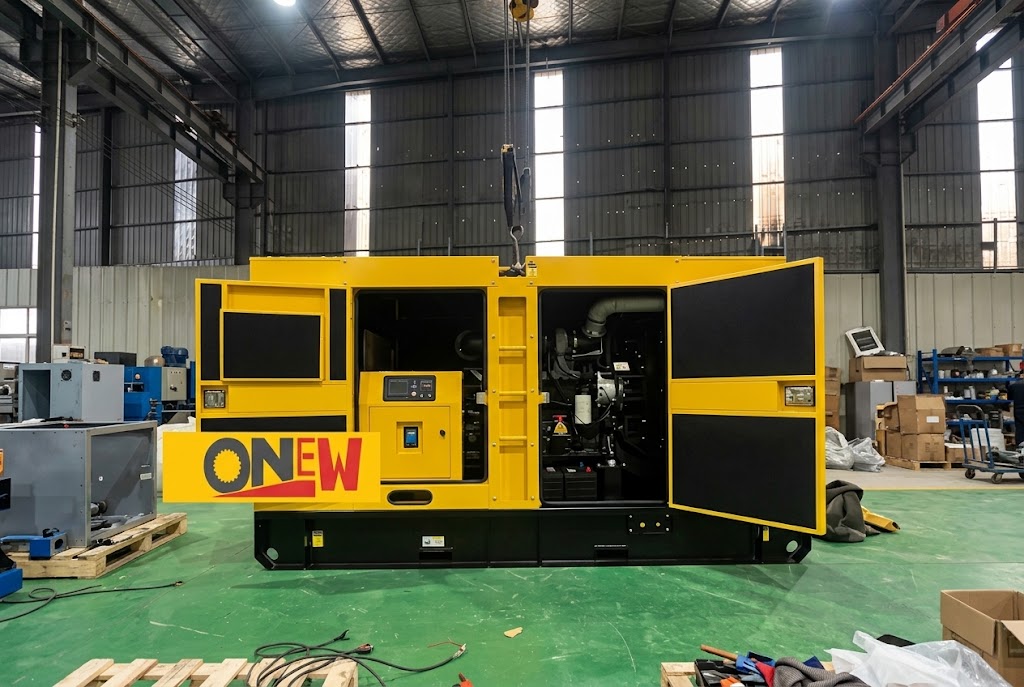
You verify a reliable china Diesel Generator Supplier through four pillars: core component quality, factory quality control and certifications, supply chain and customization capability, and after-sales support. Judge buying diesel generators from china on verifiable evidence, not general assumptions about Chinese manufacturing. Sizing comes first. Calculate your total power requirements before you compare quotes, so you evaluate the right diesel generator class and secure a reliable power solution. Treat this guide as an actionable checklist. It helps you shortlist and audit any specialized china diesel generator supplier. Apply it to chinese diesel generator suppliers and confirm each claim with documents, not promises.
Key Takeaways
-
Check the engine and alternator quality before you buy. Ask for brand names and test reports.
-
Verify factory standards with a load bank test and ISO certificates. Demand documents, not promises.
-
Confirm supply chain details like lead times and order terms. Get everything in writing.
-
Understand warranty terms and spare parts availability. Test the support team with a technical question.
-
Run due diligence and avoid unrealistic prices. Book a pre-shipment inspection to catch problems early.
Evaluate a China Diesel Generator's Core Components
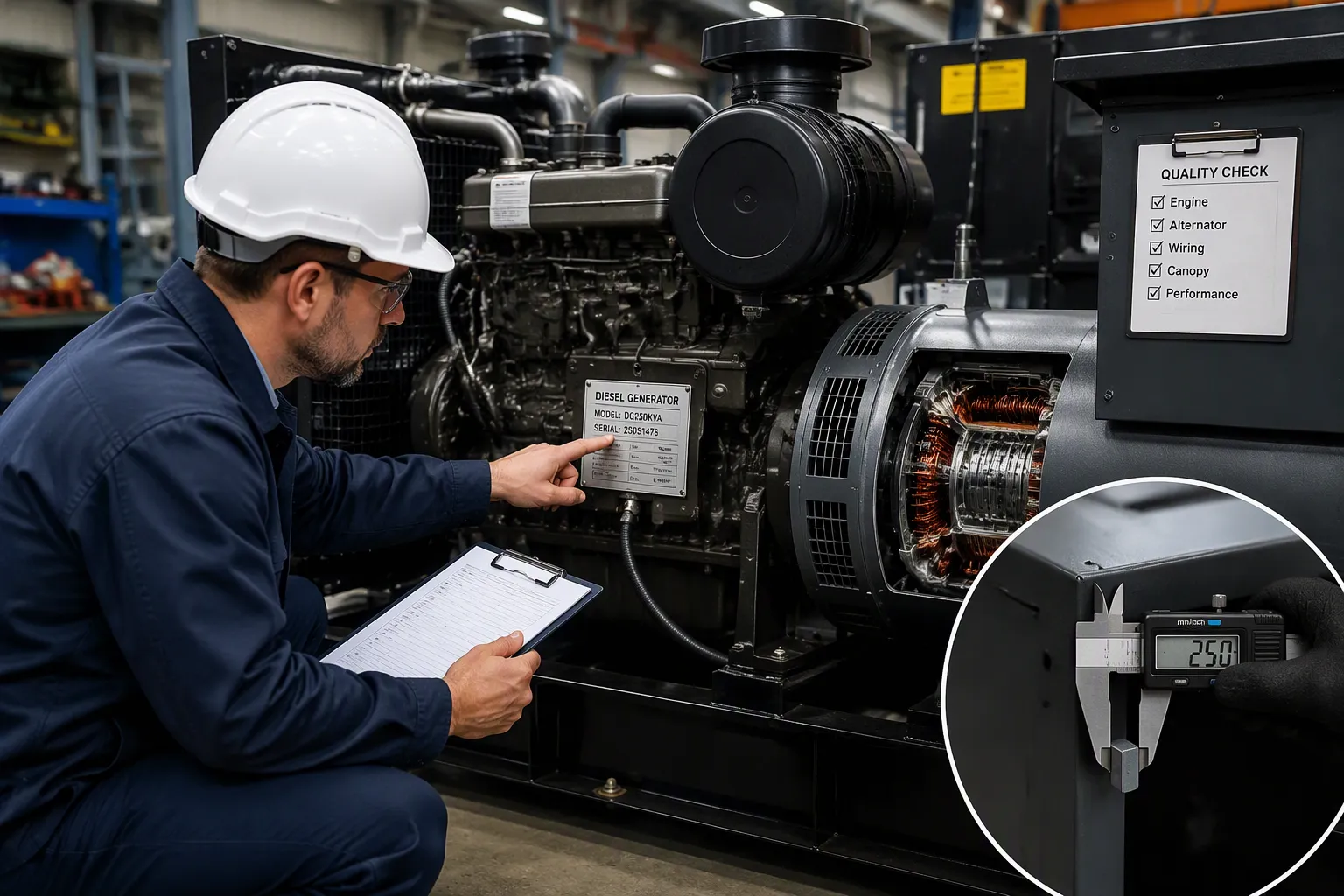
Engine and Alternator Quality
Compare engines, alternators, and canopies across suppliers with a structured checklist. Spot quality differences between different suppliers by asking what each component actually is, not what the brochure claims.
|
Component |
What to Compare |
Quality Signals |
Red Flags |
|---|---|---|---|
|
Engine |
Brand reputation and origin |
Established brands with proven service networks |
Unknown brands priced far below peers |
|
Alternator |
Build quality, not just design |
100% copper windings, continuous-duty rating |
Aluminum coils, reduced winding turns, low-grade insulation |
|
Canopy |
Steel thickness and paint |
Confirmed 2mm steel, smooth and textured finish |
Thin steel sold as 2mm, paint that fades outdoors |
Ask for the engine model and serial number, the alternator nameplate, and a factory test report before shipment. Confirm whether the copper claim covers stator windings, rotor windings, or both. Check rated output against maximum output and duty rating, and identify the power factor behind any kW or kVA figure. A short-duration maximum cannot justify a continuous-duty purchase.
Match engine power output to your actual load. Calculate full load kW as total amps times supply voltage divided by 1,000, then add 25% reserve capacity. Starting loads for motors can reach up to six times running load, so size for the surge. A product line spanning roughly 110kW to 2000kW across 50Hz and 60Hz configurations shows the range available. Ricardo-based 60Hz options from about 110kW to 360kW suit smaller sites and mobile duty. Large-frame 50Hz engines fit high-power industrial and prime-power applications. Choose the configuration that matches your load profile, not the lowest quote.
Canopy and Controller Checks
When sourcing a Cummins Engine 6ZTAA13-G2 Diesel Generator, start by inspecting the canopy steel thickness directly. Most quality China diesel generator canopies use 2mm steel, yet some suppliers ship 1.5mm or 1.8mm units while claiming 2mm. Confirm the figure in writing and check it on site where possible. Test paint thickness and density in person. Low-quality paint can fade in less than three months outdoors, while good paint looks smooth, bright, and textured.
For controllers on this unit, confirm the brand and model, then verify the functions you need: protection settings, load management, and remote monitoring. Well-recognized controller brands in the Chinese market include Deepsea, ComAp, Smartgen, and Deif. Request the controller datasheet and confirm it matches the quoted diesel generator. These checks protect long-term operational reliability and give you confidence in the reliable quality of high-quality diesel generators.
Verify a Chinese Diesel Generator Supplier's Factory Standards
Using a Generator Factory Audit Checklist
Walk the production floor and confirm the equipment, assembly line organization, and in-house testing match the claims. A credible china diesel generator manufacturer runs a load bank test at 80% capacity for two hours, plus a 30-minute no-load run. Ask to see fuel consumption and noise test records, not just a brochure figure.
|
Inspection Area |
What You Should Verify |
|---|---|
|
Engine fluids and fuel system |
Oil and coolant within spec; day tank above 75% capacity; no leaks under the skid |
|
Lubrication and cooling |
Running oil pressure 30–60 psi; coolant temperature 165–195°F under load |
|
Electrical and battery |
Battery terminal voltage 12.6V+ (12V) or 25.2V+ (24V); charger output |
|
Output power |
Voltage and frequency (e.g., 480V / 60Hz); AVR calibration |
|
Safety systems |
Test low-oil and overspeed shutdowns; confirm no fault codes |
|
Load testing |
2-hour load bank test at 80% capacity; 30-minute no-load run |
Review quality documentation on site. Confirm written quality control protocols, inspection records, and signed test reports for the exact unit. A supplier with deep technical knowledge answers component questions directly and shares documents without delay. Evasive answers signal a weak factory quality standards system.
Reading ISO, CE, and Test Reports
Request the full document package: the Declaration of Conformity, a Technical File index, and test reports citing specific standards such as EN ISO 8528-13:2016. A certificate alone proves little.
The Declaration of Conformity is the legally required, manufacturer-signed document listing applicable directives, standards, and covered models. Authorities ask for the DoC and Technical File, not a certificate.
Check that the DoC names the exact models and power ratings in your quotation. A DoC covering a broad range does not cover a large open unit. Confirm coverage of Machinery, LVD, and EMC directives, then verify the certificate number with the issuing body through its official website. Check third-party test certificates against the EU NANDO database. Confirm international compliance standards such as ISO 8528 and ISO 9001:2015, and treat any claim without a verifiable number and scope as unverified. This discipline separates real international compliance certifications from a logo on a page.
Assess a China Diesel Generator Manufacturer's Supply Chain
OEM Generator Manufacturer Capabilities
A reliable OEM partner supports customization across power ratings, voltage and frequency, canopy type, controller, and smart monitoring. Ask for logo and color changes, private-label packaging, manual customization, and shipping-mark design. Deeper options include panel layout, socket configuration, and control features such as USB ports, DC output, parallel ports, Bluetooth, ECO mode, or electric start. Confirm the supplier can explain each option clearly and hold a stable configuration for repeat orders.
Distinguish a real factory from a trading company before you commit.
|
Capability |
Reliable OEM Manufacturer |
Trading Company |
|---|---|---|
|
Manufacturing transparency |
Discloses facilities, assembly, testing, component origin |
Broader variety; you must identify the actual factory |
|
OEM customization |
Direct control over logo, label, carton, manual, voltage |
Limited; depends on the underlying factory |
|
Quality control |
Documented checks for starting, load, voltage, frequency, wiring |
Responsibility less clear |
|
Spare parts |
Faster matching and long-term availability |
Tied to the factory |
Ask where canopies, baseframes, and fuel tanks are fabricated. In-house sheet-metal work shortens design changes. Confirm full-load test capability for large units, and check that CE certification references EN ISO 8528-13:2016. A product range spanning high-power 50Hz frames such as the ON-M2500P (2000kW) and ON-B1875P (1500kW), 60Hz Ricardo-engine options from roughly 110kW to 360kW, and configurations like the Perkins Engine 4006-23TAG3A Diesel Generator shows where each fits: large frames for prime industrial duty, smaller 60Hz units for mobile and site power.
Logistics, Lead Times, and Order Terms
Plan shipping early. Sea freight in FCL or LCL suits heavy generators best; rail reaches Europe in about 18–20 days. Choose price terms deliberately: EXW, FOB, or FCA place goods at your control early, while CIF, CFR, DDU, or DDP shift more responsibility to the supplier. Collect the proforma and commercial invoice, packing list, bill of lading, Certificate of Origin, test certificate, and CE documentation.
Document order terms in the contract. Fix product specifications and technical specifications in writing, including model, rating, voltage, frequency, and controller. State lead times, packaging, inspection rights, and payment milestones. Firm prices and stable configurations protect both sides on repeat orders.
Confirm After-Sales Support and Warranty
Warranty Terms and Spare Parts
Understand the warranty terms before you order. Confirm the coverage period, the exclusions, and who performs repairs in your region. A common structure runs 12 months from commissioning or 18 months from shipment, whichever comes first. Some suppliers instead count hours of use, such as 1,000 hours, 12 months from receipt, or 15 months from delivery. Ask what starts the clock. Sea freight can quietly consume a month of coverage.
|
Warranty Dimension |
Typical Term |
|---|---|
|
Coverage period |
12 months from commissioning or 18 months from shipment, whichever comes first |
|
Repair responsibility |
Repair or replacement for manufacturing defects under normal operation and maintenance |
|
Response time |
Stated in the service-level agreement |
|
Spare parts lead time |
Routine parts in about 3–10 business days; special components 4–12 weeks |
Clarify exclusions, especially damage from poor fuel, incorrect installation, or neglected servicing. Consumables such as oil, filters, belts, and batteries almost never fall under coverage. A recommended spares package typically costs 2–5% of unit value and includes filters, belts, and gaskets. Confirm local availability to verify real spare parts availability. A three-year warranty with a defined 24-hour response usually beats a five-year warranty with undefined terms.
Service Response and Technical Help
Test the support process before you sign. Send a practical technical question and judge the reply. A fast, specific answer tells you more than polished promises. Request a written service agreement that names who handles repairs, whether remote troubleshooting exists, and how quickly the supplier dispatches parts.
Confirm that manuals and support documents arrive in English. Language barriers can slow fault diagnosis and repair coordination. Some suppliers provide 24-hour online technical support in English, but confirm this in advance. Ask for two or three customer references in a similar climate. Their experience reveals whether after-sales support exists beyond the sales department.
Weigh warranty and service models as trade-offs. Longer coverage and faster response cost more upfront. A short term with a clear service-level agreement often delivers better warranty backup than a long term with vague language. Judge any chinese diesel generator supplier on documented commitments, and treat the diesel generator quality claim as verified only when the paperwork matches the promise.
Verify Chinese Diesel Generator Suppliers and Avoid Pitfalls
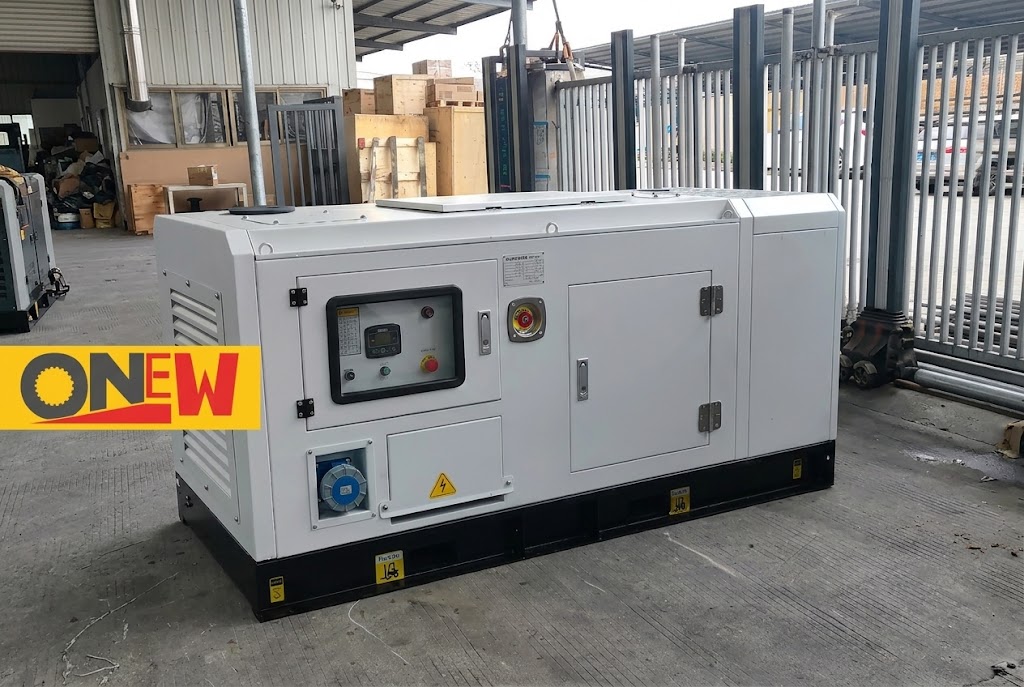
Due Diligence and Factory Visits
Run due diligence in a fixed sequence, so no gap survives to the contract stage. Start by defining your non-negotiables: grid compliance, noise limits, and self-maintenance needs. Verify the engine model number against the manufacturer's official catalog, and request clarification if the listing is missing or mismatched. Demand a factory test report with load bank results at 25%, 50%, 75%, and 100% load, plus voltage stability, frequency deviation, and the noise measurement method. Confirm whether "silent" means engineered acoustic treatment or a plain open frame. Collect the wiring diagram, torque specs, service manual, and spare parts list before shipment. Clarify shipping terms last, and separate FOB from CIF, including whether customs brokerage and duties sit inside the price.
A site visit settles what paperwork cannot. Walk the production line, the warehouse, and the test bay. Check that engines sit indoors, that a permanent load bank with ventilation exists, and that canopy welding and painting happen on site. Look for test reports carrying serial numbers and signatures rather than blank templates. Where travel is impractical, request a live video walkthrough. A transparent manufacturer accommodates the request without hesitation.
Red Flags and Unrealistic Prices
Treat certain signals as deal-breakers. A supplier who refuses third-party inspection from firms such as SGS or Bureau Veritas ends the conversation, whatever the price. So does a demand for 100% prepayment before shipment, a certificate that fails database verification, or vague component language that persists after one clarification. One deal-breaker closes the evaluation. Two or more unresolved concerns do the same.
Other flags warrant investigation rather than immediate rejection. A price 20% or more below the market median deserves a written cost explanation. Unstated winding material needs a contractual "100% copper" clause and verification at inspection. A standby rating presented as prime power requires a cross-check against the OEM datasheet. A missing serial-numbered load bank report calls for a witnessed pre-shipment test. Thin canopy steel is minor and negotiable.
The stakes are real. A South African distributor preparing a 12-unit order ran a pre-shipment inspection with a winding resistance test. The readings missed the specified standard value and exposed non-conforming windings. That inspection saved a $60,000 order.
Watch the quote itself. Vendors sometimes present peak surge wattage instead of continuous wattage, so demand the continuous rating in writing. Freight fees hide in bargain quotes: open-frame units weigh 300–400+ pounds, and cheap offers often assume you own a forklift and omit liftgate service. Starting batteries and transfer switches frequently sit outside the sticker price. Judge every chinese diesel generator supplier on verifiable evidence, not optimism or blanket skepticism. Apply the same discipline when buying diesel generators from china that you would apply to any market, and let documents decide.
You now have five evaluation areas: core components, factory standards, supply chain, after-sales support, and due diligence. The lowest quote rarely delivers the lowest lifetime cost. A homeowner's immediate operating cost was about $1.75 per operating hour ($0.349 per kWh), but factoring in depreciation and major maintenance over 10 years raised the projected cost to $2.75 per operating hour ($0.515 per kWh).
Weigh component quality, verified factory standards, and after-sales commitments against price. Apply this checklist to at least two or three shortlisted suppliers before you commit. Request test reports and customer references as your final confirmation step. That discipline turns the purchase of your Perkins Engine 4006-23TAG3A Diesel Generator into a decision you can defend for years.
FAQ
How do I calculate the right generator size before I request quotes?
Add up the running load of every device you plan to power. Convert amps and volts to kW, then add 25% reserve capacity. Size for motor starting surges, which can reach several times running load. Match the diesel generator class to that figure before you compare prices.
How can I confirm a supplier's certificate actually covers my model?
Ask for the Declaration of Conformity and check that it names your exact model and power rating. Verify the certificate number with the issuing body. Confirm the scope covers the directives you need. A logo on a brochure proves nothing without a matching document.
What separates a real factory from a trading company?
Ask where the canopy, baseframe, and fuel tank are fabricated. A real factory performs sheet-metal work and full-load testing in-house. Request a live video walkthrough of the assembly line and test bay. A trading company often cannot show these directly.
When does the warranty clock start?
Confirm the trigger in writing. Common terms run 12 months from commissioning or 18 months from shipment, whichever comes first. Some suppliers count operating hours instead. Sea freight can consume a month of coverage, so ask before you order.
Should I book a pre-shipment inspection?
Yes. A third-party inspection with a winding resistance test catches non-conforming components before shipment. Request load bank results at 25%, 50%, 75%, and 100% load. The cost is small against the value of the order.