Hydraulic telescopic masts are generally the better choice for light towers that are deployed frequently, operated by different crews, or required to reach working height quickly. Manual telescopic masts are often more suitable for cost-conscious projects, occasional use, and applications where a simpler lifting mechanism is preferred. For light tower manufacturers and equipment buyers, the right choice depends on mast height, deployment frequency, operator safety, maintenance resources, transport requirements, and total cost of ownership.
A light tower mast does more than raise the lamps. It determines how quickly the lighting system can be deployed, how easily the operator can adjust the working height, and how the equipment performs during repeated transport and outdoor operation. When comparing hydraulic vs. manual telescopic masts, buyers should evaluate the complete mast assembly rather than focusing only on the lifting method.
ONEWPOWER supplies mobile light tower generator solutions for construction, roadwork, mining, and other outdoor applications. Its product range includes hydraulic and manual mast configurations, giving buyers practical options for different site conditions and operating requirements.
How Hydraulic and Manual Telescopic Masts Work
A hydraulic telescopic mast uses a hydraulic cylinder and related components to extend or retract the mast sections. Depending on the design, the operator controls the lifting process through a hydraulic system integrated into the light tower. This reduces the physical effort required to raise the lighting assembly and can make repeated deployment more convenient.
A manual telescopic mast relies on a mechanical lifting arrangement, such as a hand-operated winch or another manual mechanism, to raise and lower the mast sections. The operator controls the movement directly and secures the mast according to the manufacturer's operating procedure. The exact mechanism varies by product design, so buyers should confirm whether the selected model uses a winch, locking pins, or another arrangement.
The main difference is operational: hydraulic lifting reduces manual effort, while manual lifting generally offers a simpler mechanism. Neither system should be considered automatically safer or more durable without reviewing its design, rated capacity, inspection requirements, and operating instructions.
Hydraulic vs. Manual Masts: Key Differences
| Selection factor | Hydraulic mast | Manual mast |
|---|---|---|
| Deployment | Convenient for frequent raising and lowering | Requires operator effort |
| Operating effort | Lower physical effort | Depends on mast design and lifting mechanism |
| System complexity | Includes hydraulic components and controls | Generally simpler mechanical arrangement |
| Maintenance focus | Hydraulic fluid, hoses, seals, cylinders, and connections | Winch or lifting mechanism, cables, pins, and locks where fitted |
| Typical purchasing priority | Productivity and frequent deployment | Simplicity and initial budget |
These are general design characteristics. Actual lifting speed, mast height, load rating, and maintenance intervals must be confirmed against the technical documentation for the specific light tower model.
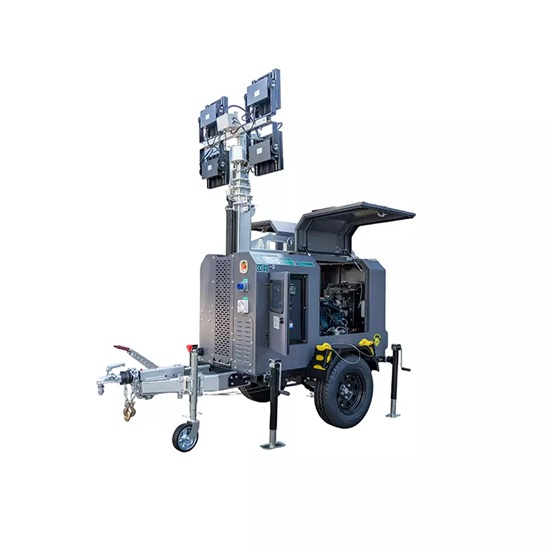
Why Choose a Hydraulic Telescopic Mast?
Hydraulic masts are particularly useful when a light tower must be deployed and retracted repeatedly. Construction contractors may move lighting equipment between work zones, while rental companies may prepare units for different customers throughout the week. Reducing the physical effort involved in mast operation can make these workflows more efficient.
Hydraulic systems are also worth considering when the lighting assembly is relatively large or when the equipment is designed for a higher mast configuration. However, buyers should not assume that every hydraulic mast is automatically faster or can lift a heavier lamp assembly. The cylinder capacity, mast-section design, hydraulic pressure, and rated load all matter.
ONEWPOWER's ON2400 heavy-duty mobile light tower is a useful example. Its published configuration includes four 600W LED lamps, a stated luminous output of 360,000 lumens, and an illumination area exceeding 3,000 m². The technical data lists a five-section hydraulic mast with a maximum height of 8 metres, 350-degree electric rotation, and a 90-degree tilting lamp head.
These details show why mast selection should be considered together with the lighting system. A high-output tower needs a mast and support structure designed for its lamp assembly and operating conditions. Buyers evaluating a hydraulic configuration can review the ONEWPOWER ON2400 hydraulic mobile light tower for its published product specifications.
For buyers, the practical question is whether the time saved during repeated deployment justifies the additional system complexity and purchase cost. On frequently used equipment, operational convenience can have a measurable value. For a tower that is raised only occasionally, the benefit may be less significant.
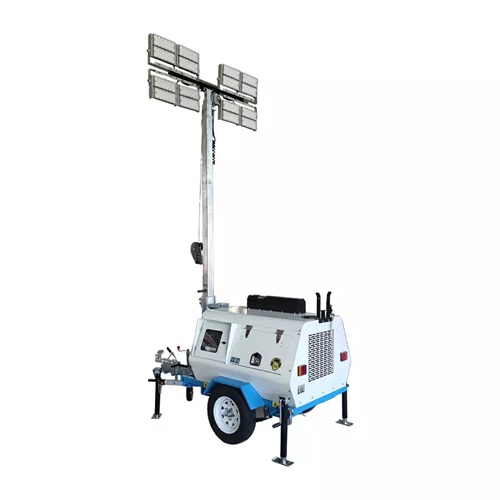
When a Manual Telescopic Mast Makes More Sense
A manual mast can be a sensible choice for projects where the light tower is installed for a period of time and does not need to be raised or lowered repeatedly throughout the day. It may also suit buyers who prioritize straightforward mechanical operation and want to avoid additional hydraulic components.
Manual systems can be attractive for smaller contractors, fixed work areas, and equipment fleets where operators are familiar with the lifting procedure. Nevertheless, manual operation still requires proper training. The mast must be raised, locked, and lowered in the correct sequence, and operators should never bypass safety devices or work beneath an unsupported mast.
ONEWPOWER's 132C light tower is listed with a manual mast configuration. Its published specifications include four 350W LED floodlights, a 70-litre fuel tank, a stated runtime of 100 hours with the lamps on, and a rated output option of 4/5 kVA. The product page also lists a manual mast and a 360-degree rotation specification.
This configuration provides a useful reference for buyers considering a manual telescopic mast in a mobile lighting package. The published product information should be checked for the exact mast height and lifting arrangement selected, as configuration details can vary. See the ONEWPOWER 132C manual mast LED light tower for the listed technical data.
Before ordering, buyers should ask how the mast is raised, how each section is secured, what inspection is required, and whether the operating procedure is included in the user manual. These details are more useful than relying on the word “manual” alone.
What Manufacturers and Buyers Should Check Before Selection
Maximum mast height and section design: Confirm the fully extended height, number of sections, retracted dimensions, and the way each section is guided and locked. More sections do not automatically mean better performance; alignment, rigidity, and structural design are equally important.
Lamp weight and wind loading: The mast must support the complete lamp assembly under the conditions specified by the manufacturer. Lamp quantity, lamp-bar dimensions, exposed surface area, and wind loading all influence structural requirements. Ask for the applicable wind rating and operating restrictions rather than assuming that a taller mast is suitable for every outdoor condition.
Stability and deployment: Check the stabilizer arrangement, ground conditions, leveling requirements, and safe deployment procedure. A light tower should be positioned on suitable ground and stabilized according to its manual before the mast is raised.
Maintenance and spare parts: For hydraulic masts, ask about fluid specifications, inspection points, hose replacement, seals, and service access. For manual systems, review the lifting mechanism, cables or winch where fitted, locking components, and corrosion protection.
Transport and storage: Confirm the mast's transport height, securing method, and whether the lamp assembly must be folded or repositioned before towing. A suitable mast design should fit the transport envelope and the operating environment of the equipment.
How Mast Choice Affects Total Cost of Ownership
The purchase price is only one part of the decision. A hydraulic mast may cost more initially, but it can save operator time when the tower is deployed frequently. A manual mast may have a lower purchase cost and a simpler maintenance profile, but the operator time required for repeated lifting should be included in the calculation.
A practical comparison is:
Total Mast Cost = Purchase Cost + Maintenance Cost + Spare Parts + Operator Time + Downtime Cost
For a rental fleet or contractor operating multiple towers every day, even a small reduction in deployment time can add up across a large number of operating cycles. For occasional use, the difference may not justify the higher initial investment. Buyers should compare both options over the same expected service period and deployment schedule.
Which Telescopic Mast Is Right for Your Light Tower?
Choose a hydraulic telescopic mast when fast, repeated deployment and reduced manual effort are important to daily operations. It is often a strong option for rental fleets, large construction projects, and mobile lighting equipment that moves between work areas.
Choose a manual telescopic mast when the tower is used less frequently, the operating procedure is manageable for the crew, and a simpler mechanical design better matches the project budget. The final decision should always be based on the actual mast specification, lamp load, site conditions, and safety requirements.
ONEWPOWER provides different light tower generator solutions for construction, roadwork, mining, and outdoor applications. When requesting a quotation, provide the required mast height, lifting method, lamp configuration, deployment frequency, operating environment, and transport requirements. This allows the manufacturer to evaluate a suitable configuration instead of recommending a mast based on height alone.
Frequently Asked Questions
What is the main difference between a hydraulic and a manual telescopic mast?
A hydraulic mast uses a hydraulic system to extend and retract the mast, reducing manual effort. A manual mast uses a mechanical lifting arrangement operated by the user. The exact mechanism depends on the product design.
Is a hydraulic mast better for a mobile light tower?
A hydraulic mast is often more convenient when a light tower is deployed frequently or needs regular height adjustment. Buyers should still check the mast's rated load, height, stability requirements, and maintenance needs.
Are manual telescopic masts suitable for construction sites?
Yes. Manual masts can be suitable for construction applications where deployment is less frequent and operators can follow the specified lifting and locking procedure. Site conditions and the manufacturer's safety instructions must be considered.
What mast type does the ONEWPOWER ON2400 use?
The published ON2400 technical data lists a five-section hydraulic mast with a maximum height of 8 metres, 350-degree electric rotation, and a 90-degree tilting lamp head.
Does the ONEWPOWER 132C use a manual mast?
Yes. The 132C product page lists a manual mast configuration, four 350W LED floodlights, a 70-litre fuel tank, and a stated 100-hour runtime with lamps on. Confirm the exact configuration and mast dimensions before ordering.
What should I check before buying a telescopic mast light tower?
Check maximum mast height, number of sections, lifting method, lamp weight, wind rating, locking system, stabilizers, transport dimensions, and maintenance requirements. Also confirm the operating procedure and safety restrictions.
Can ONEWPOWER supply different mast configurations?
ONEWPOWER lists both hydraulic and manual mast configurations across its light tower product range. Buyers should provide their required height, lifting method, lighting package, and application details to confirm the available model and configuration.