When two suppliers quote silicone coolant hoses with similar dimensions and temperature ratings, but only one specifies SAE J20 R4, how should you compare them?
For automotive parts distributors, OEM purchasing teams, and engineers, a hose's material and appearance are not enough to establish its suitability. Buyers also need to understand the specified hose type, operating conditions, and evidence of compliance.
SAE J20 provides a technical reference for evaluating coolant system hoses. Understanding its requirements can help buyers compare products more accurately, identify missing information in quotations, and select a hose that meets their application needs.
Key Takeaways
- SAE J20 covers multiple coolant hose types, so identifying the applicable type is essential when preparing a purchase specification.
- SAE 20R1 and 20R2 are heavy-duty hose types, while 20R3 and 20R4 cover heater and radiator hoses for normal service, respectively.
- SAE J20 compliance does not automatically establish compatibility with every coolant formulation or prove suitability for every operating condition.
- Selecting a silicone coolant hose requires matching the standard, material, operating conditions, dimensions, and supporting documentation to the intended application.
What Is SAE J20 and Why Does It Matter for Coolant Hose Specification?
SAE J20 is a technical standard published by SAE International under the title Coolant System Hoses. It establishes requirements for coolant system hoses used in applications involving water and ethylene glycol-based engine coolants.
For buyers, the standard provides a common reference for specifying and evaluating hose performance. Instead of relying on descriptions such as "high-temperature hose" or "heavy-duty construction," purchasing teams can identify the applicable hose type and request evidence that the proposed product meets the relevant requirements.
The standard addresses requirements associated with hose construction, dimensions, and performance. The specific requirements depend on the hose type and applicable edition.
This distinction matters when comparing quotations. Two hoses may use similar materials and have matching dimensions but differ in construction or documented performance.
A complete purchase specification should identify the required SAE J20 hose type and applicable requirements, rather than simply stating "SAE J20 compliant."
You can find the official SAE J20 standard document via SAE International.
SAE J20 Hose Types: What Are the Differences?
SAE J20 includes different hose types for different service conditions. Understanding their intended applications helps buyers identify which requirements to investigate before requesting a quotation.
| Hose type | General application | Main consideration |
| SAE 20R1 | Heavy-duty coolant hose | Confirm the required construction and pressure performance |
| SAE 20R2 | Flexible, heavy-duty wire-embedded hose | Evaluate the need for wire support and resistance to collapse |
| SAE 20R3 | Heater hose for normal service | Verify suitability for the heater circuit |
| SAE 20R4 | Radiator hose for normal service | Check radiator circuit requirements and any relevant vacuum conditions |
| SAE 20R5 | Corrugated, wire-supported hose for normal service | Confirm that the construction suits the installation and operating conditions |
These descriptions are general guidance. The applicable SAE J20 edition should be consulted for formal definitions and requirements.
SAE 20R1 and 20R2: Heavy-Duty Applications
SAE 20R1 is intended for heavy-duty coolant hose service. SAE 20R2 covers a flexible, heavy-duty wire-embedded hose type for similar general service.
The distinction is relevant when the application requires a particular construction or additional structural support. However, buyers should not assume that either designation automatically guarantees a specific reinforcement layer count or pressure rating. Those details must be verified against the applicable requirements and the proposed product's documentation.
SAE 20R3 and 20R4: Heater Hose vs. Radiator Hose
SAE 20R3 covers heater hose for normal service, while SAE 20R4 covers radiator hose for normal service.
Although both carry coolant, their intended functions differ. A heater hose is used in the heating circuit, whereas a radiator hose connects components within the engine cooling circuit.
For buyers sourcing a silicone heater hose or silicone radiator hose, this distinction provides a practical starting point. The two types should not be treated as interchangeable solely because they use silicone or operate with engine coolant.
SAE 20R4 may be relevant to conventional radiator hose projects, but the final selection must still account for the vehicle manufacturer's requirements and actual operating conditions.
SAE 20R5: Corrugated, Wire-Supported Hose
SAE 20R5 covers a corrugated, wire-supported hose type for normal service. Its construction differs from conventional radiator hose designs, so installation geometry and the need for structural support should be considered.
Not every cooling system requires this type. Buyers should first establish the hose's function and required construction before deciding whether R5 is relevant.
What Does SAE J20 Test—and What Does It Not Guarantee?
SAE J20 compliance should be understood in relation to the applicable hose type, standard edition, and specified test requirements.
Depending on the requirements involved, evaluation can address hose dimensions, pressure performance, and the effects of temperature and coolant exposure. Buyers should consult the relevant standard and test report for the exact methods and acceptance criteria rather than assuming that every hose type is evaluated identically.
Three distinctions are especially important.
Temperature performance
A hose's material temperature rating does not, by itself, establish that the finished hose meets the applicable standard requirements. Buyers should consider the compound, reinforcement, construction, and intended operating temperature together.
Pressure and dimensional performance
Working pressure, pressure cycling, and possible vacuum exposure can affect hose selection. Where resistance to collapse is important, buyers should verify that the proposed construction meets the application's requirements rather than assuming all radiator hoses offer equivalent performance.
Coolant compatibility
SAE J20 addresses specified coolant hose applications, including those involving water and ethylene glycol-based coolants. Compliance should not be interpreted as proof of compatibility with every commercial coolant formulation or additive package.
For example, OAT (organic acid technology) describes a coolant formulation approach. If a system uses a particular OAT coolant, buyers should confirm that the hose compound is suitable for that formulation and request additional compatibility data where necessary.
SAE J20 also does not eliminate the need to verify application-specific installation details, connections, or service conditions.
The key point is that standard compliance establishes performance against specified requirements; it does not automatically prove suitability for every application.
How to Select Silicone Coolant Hoses That Meet SAE J20 Requirements
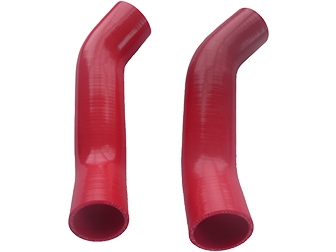
Selecting a silicone coolant hose involves more than checking its temperature rating. Buyers need to identify the applicable SAE J20 hose type, evaluate the operating conditions, and confirm that the material and construction meet the system's requirements.
1. Identify the Required SAE J20 Hose Type
Start with the hose's function in the cooling system. SAE 20R3 covers heater hose for normal service, while SAE 20R4 covers radiator hose for normal service. Heavy-duty applications may require a different hose type, depending on the equipment manufacturer's specification.
Confirm the required type against the applicable SAE J20 edition rather than selecting a hose based on material alone.
2. Match the Hose to Operating Conditions
Check the system's continuous and peak temperatures, working pressure, pressure cycling, and any relevant vacuum exposure. These conditions help determine the required hose construction and performance.
Silicone compounds can be designed for demanding thermal environments, but actual operating limits depend on the formulation and finished hose construction. EPDM and other materials may also be suitable, depending on the coolant chemistry, operating conditions, and application requirements.
The best material choice is the one that meets the system's performance requirements, not necessarily the one with the highest advertised temperature rating.
3. Confirm Coolant Compatibility
Identify the coolant formulation used in the system, including any specific additive technology. Meeting SAE J20 requirements does not automatically establish compatibility with every coolant formulation.
Where a particular OAT or other coolant is used, request confirmation that the proposed hose compound is suitable for that formulation and obtain supporting data where necessary.
4. Verify Dimensions and Supporting Documentation
Confirm the required inside diameter, length, bend angles, reducer dimensions, connection details, and available installation space. For complex routing or limited clearance, a formed or custom-shaped silicone hose may be worth evaluating.
Before placing an order, request the relevant SAE J20 test report and confirm that it applies to the proposed hose type and construction. Specify a material class, such as Class A, when required by the applicable standard and product specification.
What Should Buyers Include in a Purchase Specification?
A clear specification should cover five areas:
- Standard and hose type: Applicable SAE J20 edition, required hose type, and material class where relevant.
- Operating conditions: Continuous and peak temperatures, working pressure, pressure cycling, and vacuum exposure.
- Coolant: Coolant formulation and specific compatibility requirements.
- Dimensions: Inside diameter, length, bend geometry, and connection details.
- Documentation: Applicable test reports and supporting material or compatibility data.
Providing these details helps suppliers assess whether a proposed hose meets the project's requirements before production begins.
Discuss Your Silicone Coolant Hose Requirements with RAINBOW
RAINBOW offers silicone coolant hoses, silicone heater hoses, and custom hose options for vehicle applications. Its website also lists SAE J20 testing documentation.
If you are sourcing a silicone coolant hose, share your required hose type, drawings, dimensions, coolant, and operating conditions with RAINBOW to discuss the requirements for your project.
FAQ
Is SAE J20 R4 suitable for all vehicle cooling systems?
No. SAE 20R4 is intended for radiator hose applications under normal service conditions. Heavy-duty systems may require a different hose type, depending on the equipment manufacturer's specification and operating requirements. Confirm the required hose type, working pressure, temperature, and any vacuum conditions before selecting a product.
Can a silicone coolant hose meet SAE J20 without being compatible with every OAT coolant?
Yes. Meeting the applicable SAE J20 requirements does not automatically establish compatibility with every coolant formulation. If the system uses a specific OAT coolant, request confirmation that the hose compound is suitable for that formulation and obtain additional compatibility data where necessary.
What documentation should I request from a supplier to verify SAE J20 compliance?
Request a test report identifying the applicable standard edition, hose type, tested construction, and relevant results. Where applicable, ask for laboratory details, material information, and confirmation that the tested construction corresponds to the product being quoted. A general supplier statement is less informative than documentation that clearly identifies the scope of the test evidence.