Exhaust system heat can damage nearby ducting if the hose is not designed for the working conditions. High-temperature silicone duct hose can be suitable for certain exhaust-related and high-temperature ventilation applications, but the right choice depends on heat exposure, the air or gas being carried, and the installation layout.
In short: Silicone duct hose can be used in some applications near exhaust systems, provided its operating conditions match the product specifications. However, direct engine-exhaust transfer and contact with hot exhaust components require confirmation that the specific hose is designed for those conditions.
Key Takeaways
- Silicone duct hose may suit certain exhaust-related and high-temperature ventilation applications.
- A temperature rating of 200°C does not automatically establish suitability for every exhaust application.
- Reinforcement helps maintain duct shape, but it does not raise the base material’s temperature rating.
- Before ordering, confirm the operating temperature, conveyed medium, installation clearance, and need for heat shielding.
Usage Rules and Application Boundaries
RAINBOW’s silicone air duct hose is intended for high-temperature ventilation and exhaust-related applications. However, its suitability depends on how the hose will be installed and used.
Potentially suitable
- High-temperature ventilation applications.
- Other exhaust-related applications that remain within the product’s specified operating conditions.
Requires product-specific confirmation
- Direct engine-exhaust transfer.
- Direct contact with hot exhaust components.
- Open-flame exposure.
- Operating conditions that may exceed the stated temperature range.
A hose designed for high-temperature ventilation should not automatically be assumed suitable for every exhaust-related task. Before selecting a product, explain the intended application to the supplier and confirm that the hose construction and specifications match the actual conditions.
What Are the Temperature Limits for Silicone Ducting?
RAINBOW’s listed high-temperature silicone duct hose has an operating temperature range of -55°C to +200°C (-67°F to +392°F). This specification applies to the listed product and should not be assumed to represent every silicone ducting hose.
Even when temperatures fall within this range, buyers need to consider how heat reaches the hose and how long it remains exposed.
Key Factors Affecting Actual Operating Conditions
- Heat exposure: Direct contact with a hot surface and heat radiating from a nearby exhaust pipe can affect the hose differently.
- Conveyed medium: The stated temperature range does not, by itself, establish a safe operating temperature for every gas passing through the hose.
- Exposure duration: Prolonged heating and repeated thermal cycling can shorten service life.
- Installation conditions: Airflow, clearance, surrounding components, and heat shielding can affect the hose’s actual operating temperature.
Do not select a hose based on its maximum temperature rating alone. Assess the complete installation and confirm the expected operating conditions with the supplier.
How to Choose the Right Silicone Air Duct Hose for Automotive Use
When selecting a silicone air duct hose for an automotive application, check these four factors before placing an order.
Identify What the Hose Will Carry
Confirm whether the hose will carry fresh air, heated ventilation air, or exhaust gas. The conveyed medium is an important factor in determining whether the product is suitable for the application.
Review the Hose Construction
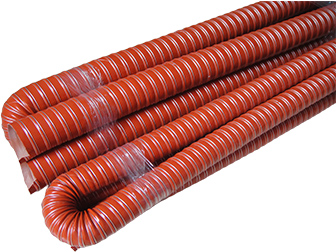
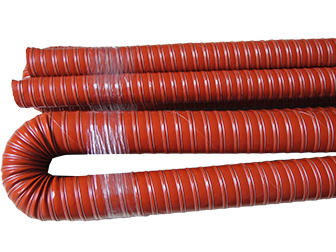
RAINBOW’s high-temperature silicone duct hose features silicone-impregnated fiberglass cloth, fiberglass reinforcement, and a continuous steel wire helix to support its flexible structure.
These materials help maintain the duct’s structure, but the listed specifications do not confirm suitability for open-flame exposure or direct contact with hot exhaust components. If your application involves these conditions, ask the supplier to verify the proposed hose for that specific use.
Check Routing and Clearance
Review the distance between the duct and exhaust components, available installation space, bends, mounting points, and nearby heat sources.
Where necessary, consider a properly designed heat shield and verify that the hose temperature remains within its rated limits.
Confirm the Operating Requirements
Check the expected operating temperature, any short-term temperature peaks, airflow requirements, and installation conditions.
For direct engine-exhaust transfer or contact with hot exhaust parts, request explicit confirmation that the specific hose configuration is designed and tested for that service.
Why Does Hose Construction Matter Near Exhaust Systems?
In automotive installations, ducting must withstand vibration, bending, and movement while maintaining its intended shape. If the hose deforms or its structure deteriorates, it may no longer perform as required.
Reinforcement supports structural stability, but the complete installation must still be assessed for heat exposure and mechanical stress. Add suitable heat shielding where required by the operating conditions.
The standard length of RAINBOW’s listed product is 4 m, and custom cutting is available. Confirm the required dimensions and installation conditions before ordering.
What Should You Confirm Before Ordering a High-Temperature Silicone Duct Hose?
Before requesting a high-temperature silicone duct hose, prepare the following information so the supplier can assess your application.
- Dimensions: Required inside diameter and hose length.
- Operating conditions: Normal temperature, expected peaks, and duration of heat exposure.
- Conveyed medium: Fresh air, heated ventilation air, or exhaust gas.
- Installation layout: Distance from exhaust components, bends, mounting space, and any heat shielding.
- Application requirements: Expected vibration, movement, and proximity to other components.
If you need a custom silicone ducting hose, share these details with the supplier before confirming the order. Clearly describe the application so the proposed product can be assessed against the actual working conditions.
FAQ
Does a Heat Shield Make Silicone Duct Hose Safe Near an Exhaust Pipe?
A properly designed and installed heat shield can reduce heat transfer to the hose. Its effectiveness depends on the materials, clearance, airflow, and heat exposure. The hose’s rated temperature limits must still be respected.
What Is the Safe Distance Between Silicone Ducting and Exhaust Components?
There is no universal safe distance. The required clearance depends on exhaust surface temperature, heat radiating from nearby components, airflow, and whether effective heat shielding is installed. Follow the equipment manufacturer’s requirements and seek application-specific guidance.
Are There Alternatives to Silicone Duct Hose Near Exhaust Systems?
Alternatives may include metal ducting or a specialized hose designed for the relevant temperature and conveyed medium. The right choice depends on the application, including whether the hose carries ventilation air or exhaust gas and whether it is exposed to direct heat. Confirm material compatibility and operating limits before choosing an alternative.
What Information Is Needed to Request a Custom Silicone Ducting Hose?
Provide the required diameter and length, operating temperature, conveyed medium, installation layout, and distance from nearby heat sources. Clearly state whether the hose will carry ventilation air or engine exhaust so the supplier can assess the application appropriately.